Named after Charles Bowyer Adderley, 1st Baron Norton KCMG PC DL JP (2 August 1814 – 28 March 1905) who was a British Conservative politician. Source. Melbourne Council Street Card Number #S371, street gazetted in 1860.

Below you'll find a list of all posts that have been categorized as “West Melbourne”
Named after Charles Bowyer Adderley, 1st Baron Norton KCMG PC DL JP (2 August 1814 – 28 March 1905) who was a British Conservative politician. Source. Melbourne Council Street Card Number #S371, street gazetted in 1860.

Spencer Street was named after Lord Spencer, former leader of the Whig party in the House of Commons. Road section running from Flinders Street northwards was gazetted 29 March 1837 by Sir George Gipps, Govener of NSW and the street is thought to have been named after John Charles Spencer, 3rd Earl Spencer, a British statesman. He was notably Chancellor of the Exchequer under Lord Grey and Lord Melbourne from 1830 to 1834. Due to his reputation for integrity he was nicknamed “Honest Jack”. Garryowen’s Chronicles of early Melbourne (1888) quotes from a supposed journal of surveyor Robert Hoddle, suggesting that Bourke instructed Hoddle as to the names of the streets. Such a journal has never been subsequently located, and the precise origin of some names remains a matter of speculation. Spencer, King and William Streets were all later extended in a northerly direction to LaTrobe Street in 1838. In 1860 Sir William Denison, Governor of New South Wales approved the gazettal of a further extension to Spencer, King and William Streets starting from LaTrobe street heading north into the suburb of West Melbourne. Source.(1) John Charles Spencer, Viscount Althorp, 3rd Earl Spencer (1782-1845) by Henry Pierce Bone.(2) NSW Government Gazette,(3) Victorian …

Gazetted in 1860 by the State Government of Victoria and named in honour of John Ward, 1st Earl of Dudley. In 1827 John Ward was appointed Foreign Secretary under George Canning, a post he held also under Lord Goderich and the Duke of Wellington, resigning office in May 1828. In 1827 he was admitted to the Privy Council and created Viscount Ednam, of Ednam in the County of Roxburgh, and Earl of Dudley, of Dudley Castle in the County of Stafford. As foreign minister John Ward was only a cipher; but he was a man of considerable learning and had some reputation as a writer and a talker. Dudley took an interest in the foundation of the University of London, and his Letters to Edward Copleston, the Bishop of Llandaff, were published by the bishop in 1840.(2) Source. (1) National Portrait Gallery London. (2) wikipedia.org/wiki/John_Ward,_1st_Earl_of_Dudley

Gazetted in 1860 by the State Government of Victoria and named in honour of General James Alexander St Clair-Erskine, 3rd Earl of Rosslyn. Source. (1) National Gallery of Scotland, General James Alexander St Clair-Erskine, 3rd Earl of Rosslyn. Photographer, Friedrich Emil Ernest Theodore Schenck.

Gazetted in 1860 by the Victorian parliament, Stanley Street West Melbourne was named after Edward George Geoffrey Smith-Stanley, 14th Earl of Derby, KG, GCMG, PC, (29 March 1799 – 23 October 1869) who was a British statesman, three-time and, to date, the longest-serving leader of the Conservative Party for the Commonwealth. Source. National Portrate Gallery London, Lord Derby, photographed by John Clarck before 1869.
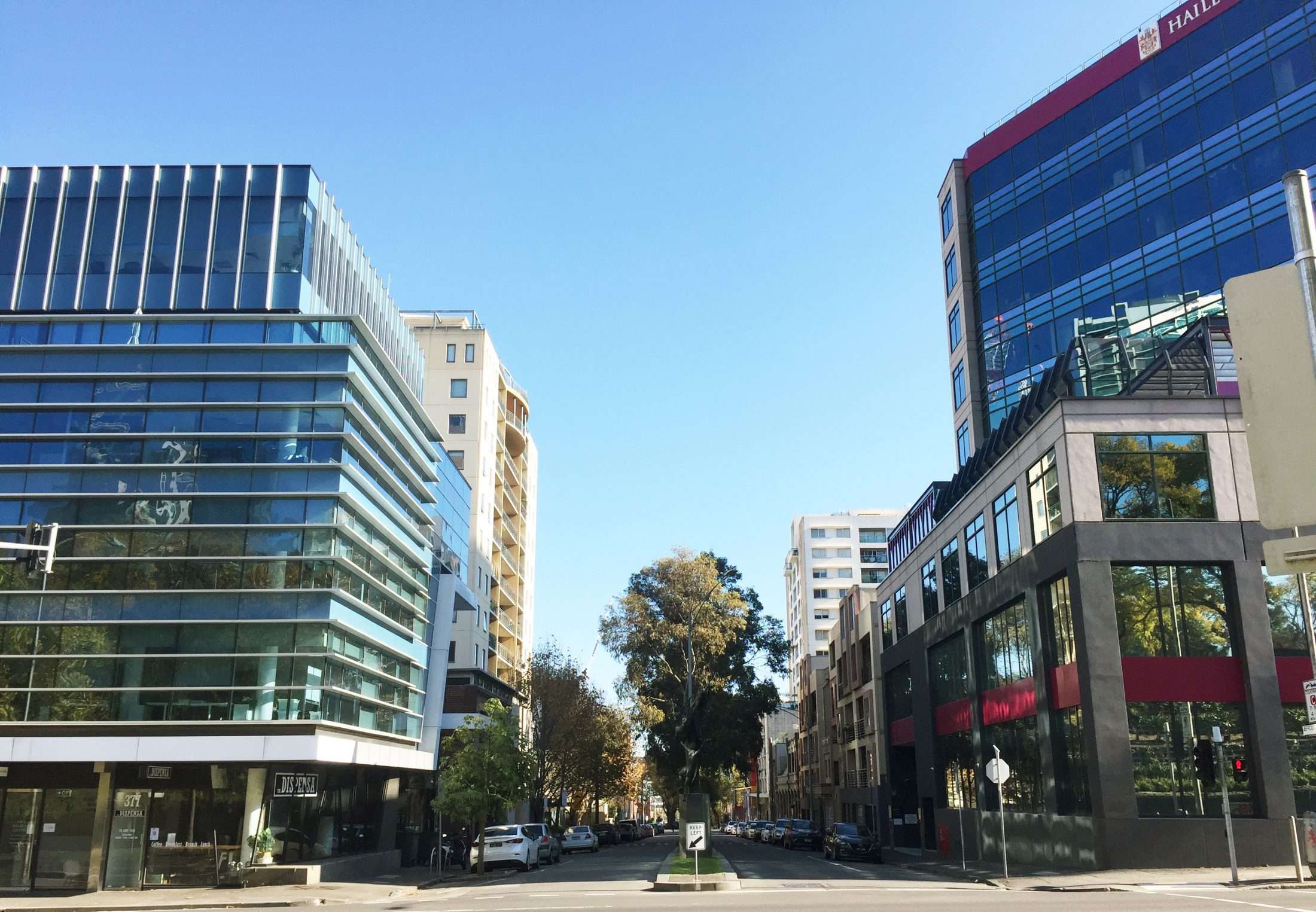
Named after Sir William Jeffcott (1800 – 1855) he was an Irish barrister, a judge of the Supreme Court of New South Wales for the District of Port Phillip from 1843 to 1845.(1) Source. (1) Jeffcott, Sir William (1800–1855)”. Australian Dictionary of Biography. Canberra: Australian National University. TOWN ALLOTMENTS. A considerable number of new allotments have been surveyed and marked out for sale, between the Flag Staff and the Swamp, abutting upon La Trobe and Spencer-streets, and a new street called after Judge Jeffcott. They will not, however, be put up to sale except upon special application, and under any circumstances we should recommend their being withheld, till the removal of the boiling-down establishments has rendered the neighbourhood a little less obtrusive upon the ollactories. We have before noticed the abandonment of the lane system, which has been productive of so much mischief. The streets are all marked out of equal width, but we doubt whether a narrowing of the blocks would not prove a still further advantage, in decreasing the tendency to the creation of rookeries, narrow rights of way, and other nuisances. In future, town allotments are only to consist of a quarter acre each, the frontage remaining …
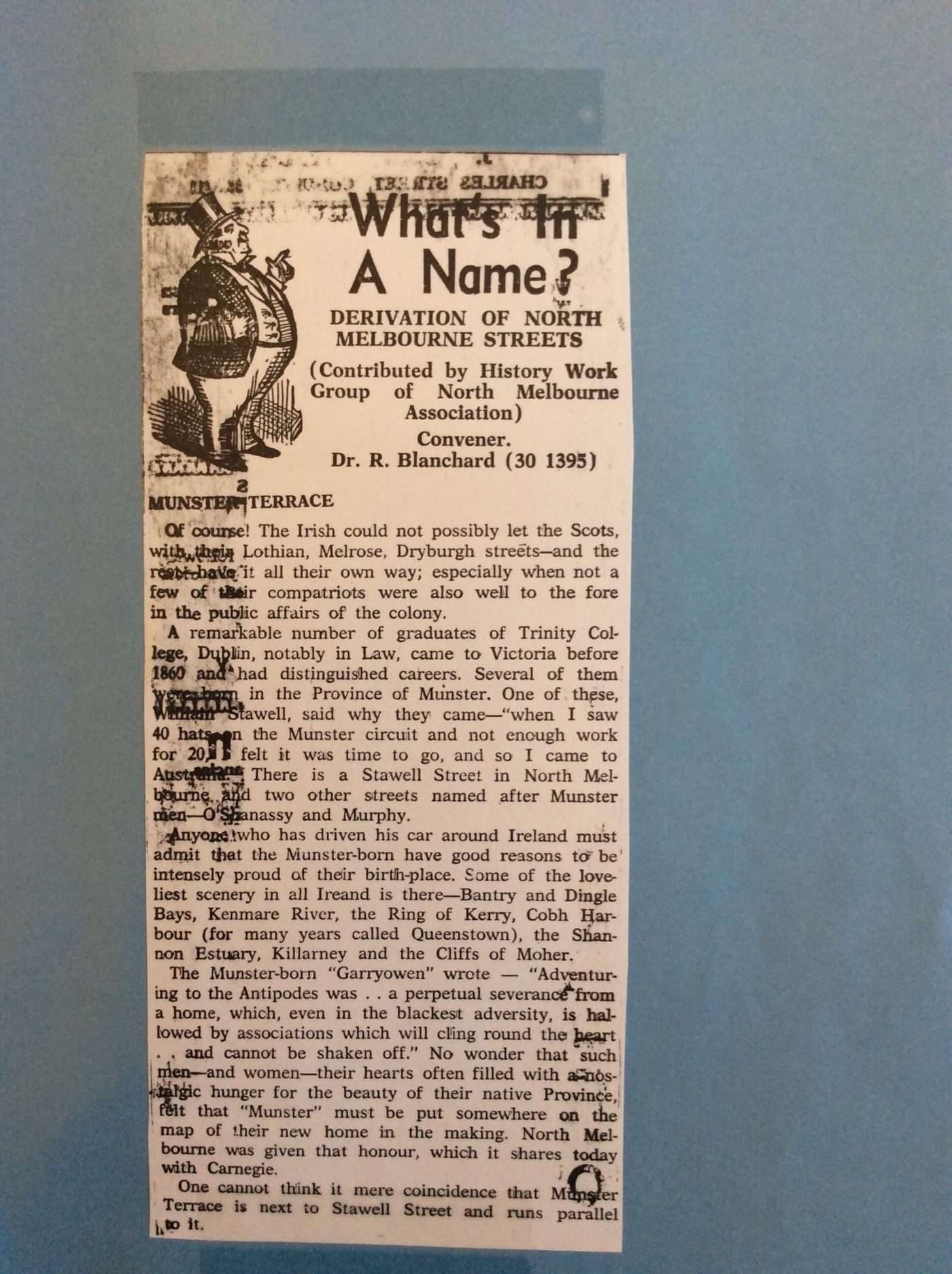
Of curse the Irish could not possibly let the Scots, with their Lothian, Melrose, Dryburgh streets—and the rest have it all their own way; especially when not a few of their compatriots were also well to the fore in the public affairs of the colony of Victoria. A remarkable number of graduates of Trinity College, Dublin, notably in Law, came to Victoria before 1860 and had distinguished careers. Several of them were born in the Province of Munster. One of these, William Stawell, said why they came—”when I saw 40 hats on the Munster circuit and not enough work for 20, I felt it was time to go, and so I came to Australia”. There is a Stawell Street in North Melbourne, and two other streets named after Munster men – O’Shanassy and Murphy. Anyone who has driven his car around Ireland must admit that the Munster-born have good reasons to be intensely proud of their birth-place. Some of the loveliest scenery in all Ireland is there—Bantry and Dingle Bays, Kenmare River, the Ring of Kerry, Cobh Harbour (for many years called Queenstown), the Shannon Estuary, Killarney and the Cliffs of Moher. The Munster-born “Garryowen” wrote — “Adventuring to the …

No novelist has read more widely in the early days of the colony than Sir Walter Scott. So Abbotsford Street was named after his home, Dryburgh Street after the abbey where he was buried. Lothian Street runs between them — Scott’s novel The Heart of Mid-Lothian was the favorite of many. “Lothian” comes from a root meaning low-lying. It was the name given to that part of Scotland’s Lowlands bounded on the north by the Firth of Forth, on the south by Lanark and Peebles, on the east by the North Sea and on the west by Stirling. The Scots and English fought for centuries to possess this tract of country, but the final battle made it part of Scotland for all time. It was worth fighting over. The soil is said to be the most fertile and easily worked in Britain. That prince of potatoes, the famous “Lothian Red”, has its home there. There are also the ruins of magnificent castles, the stately mansions of fine estates, the rolling summits of the Pentland Hills, which form the backbone of the land, beauties of coastline and woodlands, the numerous sites of battles famous in the nation’s annals, some of them …

Named after Charles Howard who was the assistant commissary general of the new colony of Port Phillip. His job was to superintend the supply of rations. The street in North Melbourne so important to Church and commerce in his day, was fittingly named Howard Street.(1) Source. Northern Advertiser, 6/7/1972. Blanchard collection, “What’s in a Name” at North Melbourne Library.
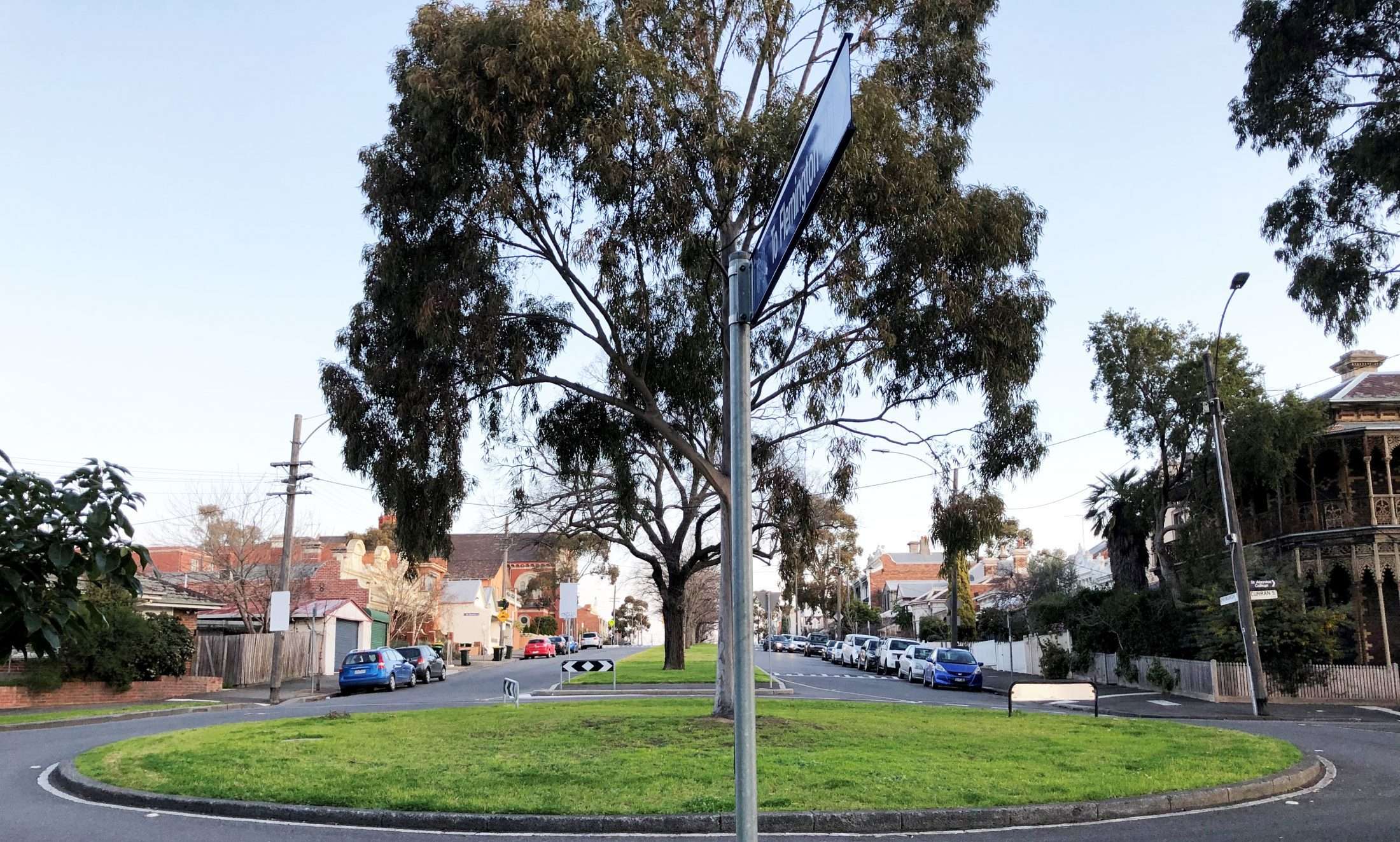
“Burgh” is a shortened form of “borough”; obsolete in ordinary English usage since the 17th century, but retained in Scotland for a town possessing a charter. It is pronounced “borough’ not “berg”. This street is a sign of Scottish nostalgia. It was named after Dryburgh Abbey, which stands in a setting of sheer beauty on a horse shoe of land encircled by the river Tweed. It looks out on the triple peaks of the Eildon Hills (1300 feet), where sacrifices were once made to the sun-god, and, later, the Romans built a great military camp. It took 12 years to build. Meantime, the builders—English and Scottish monks— lived in wooden huts on the river-bank, feeding well on the excellent salmon the river provided. The Abbey was completed on 13th December, 1152. Years of, suffering awaited it. In 1322 the retreating army of Edward II set the place ablaze. Helped by liberal gifts from Robert the Bruce, the monks restored it. In 1385, Richard II’s men made a bonfire of it again. Once more the monks restored it. At last in 1545, the English army under Hertford left it a smoking ruin. Centuries of neglect completed the destruction. Nov …